The construction landscape in Australia is currently navigating a period of intense pressure. Project managers and business owners are faced with a combination of rising material costs, skilled labour shortages, and increasingly complex regulatory requirements. In this environment, the ability to maintain total visibility over every asset on a project site is not merely a convenience: it is a fundamental requirement for maintaining profitability and site safety. For construction and field service managers, the primary challenge remains the management of high-value equipment spread across multiple, often remote, locations. When a critical machine is unaccounted for or a specialised tool is missing, the resulting downtime creates a ripple effect that can derail even the most carefully planned schedules.
Historically, asset management in the construction sector relied heavily on manual processes such as paper logs, whiteboards, or the personal knowledge of site supervisors. As project scales increase and fleets grow, these traditional methods have become insufficient. The lack of real-time data leads to significant operational blind spots where capital is tied up in redundant equipment while active sites face shortages. Hexicor Telematics, as a Platinum Partner of Teletrac Navman, understands that bridging this visibility gap is essential for a competitive edge. This article explores how integrated tracking technology provides a holistic view of every tool and asset, moving beyond simple vehicle tracking to transform site operations.
The Financial Reality of Asset Mismanagement
The economic impact of inefficient asset management in the Australian construction industry is substantial. Recent industry analysis indicates that while other sectors have seen significant productivity growth over the last three decades, construction productivity has struggled to keep pace. Specifically, the productivity gap in Australian construction costs the national economy billions every year. Research from the Australian Constructors Association suggests that even modest reforms to lift productivity could unlock upwards of $14 billion in value annually. This persistent gap underscores the urgent need for digital transformation.
In the construction sector, an asset is any item that contributes to project completion, from heavy excavators and transport trucks to smaller power tools, generators, and site huts. The financial implications of losing track of these items are multifaceted. Beyond the immediate replacement cost of a stolen or lost tool, businesses face significant indirect costs. For instance, if a specialised drilling rig is not at its scheduled location, a crew of contractors may be left idle for hours or days. The implementation of digital engineering and Building Information Modelling has been suggested to potentially increase productivity by 20 to 30 per cent (Kivits & Furneaux, 2013). Establishing a single source of truth for asset location and health is a vital first step in capturing these gains.
A Tiered Approach to Tracking Hardware
Modern construction technology offers a tiered approach to asset management, ensuring that the tracking solution matches the value and mobility of the item. Decision makers must look for integrated platforms that can synthesise data from various hardware types into a unified dashboard, such as the solutions offered by Teletrac Navman Australia.
Heavy Plant and Machinery
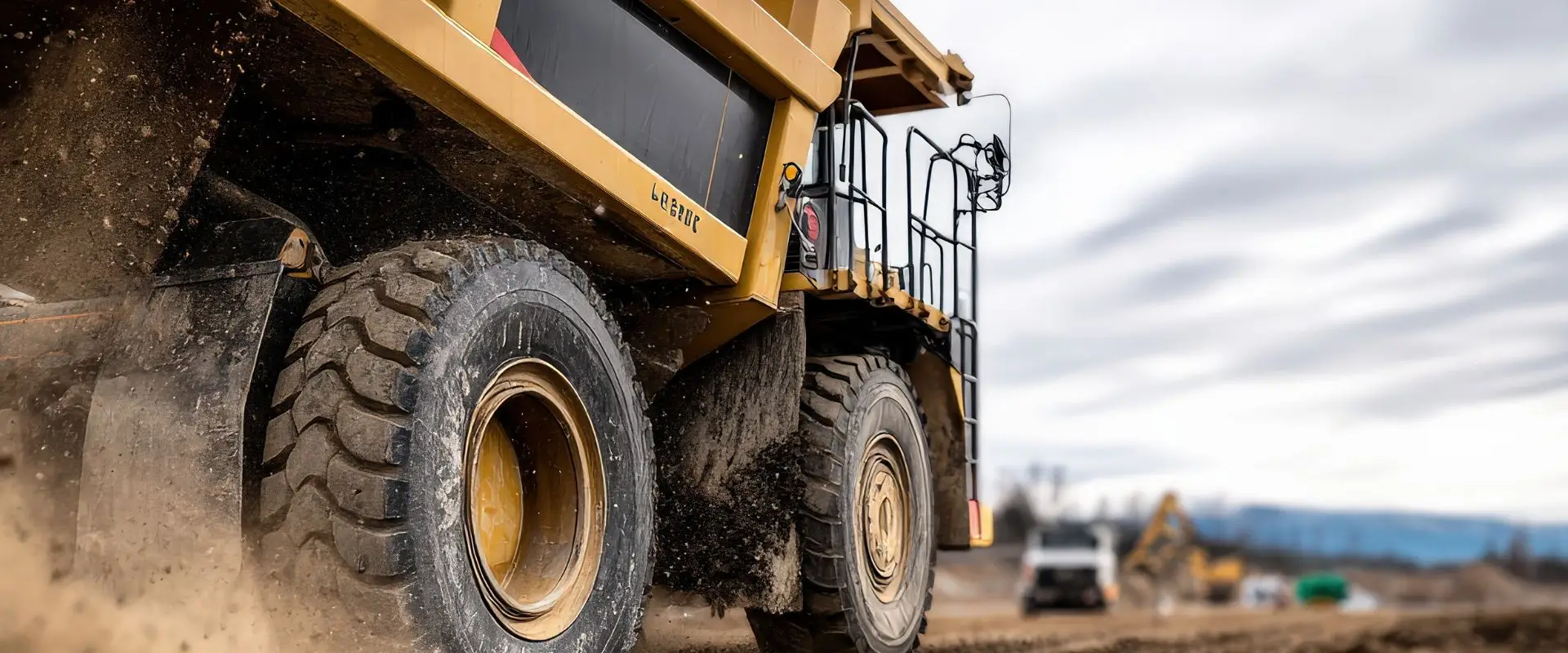
For heavy assets like excavators, cranes, and trucks, tracking involves robust telematics units. These devices do more than report coordinates: they integrate with the engine’s Controller Area Network, or CAN bus, to provide data on engine hours, fuel consumption, and idle time. This level of insight allows operations managers to identify excessive idling, which directly impacts fuel expenses and carbon footprint goals. Research into asset management models using real-time monitoring has shown that such systems can lead to a 30.8 per cent increase in asset utilisation (Iluore et al., 2020).
Non-Powered Assets
Trailers, shipping containers, and fuel tanks represent a different challenge as they lack a consistent power source. For these, long-life battery-powered trackers or solar-powered units are the industry standard. These devices are designed to report their location at set intervals or when movement is detected. This ensures that even stationary assets can be recovered quickly if they are moved without authorisation.
Small Tools and Equipment
The highest frequency of loss often occurs with smaller tools such as jackhammers, saws, and surveying equipment. Bluetooth Low Energy, or BLE, tags are an effective solution here. These small tags communicate with a gateway, which could be a telematics-enabled vehicle parked nearby or a worker’s smartphone. This creates a digital inventory that alerts managers if a tool is left behind at the end of a shift, preventing the slow drain of capital through tool attrition.

Mitigating Theft and Unauthorised Use
Theft remains a pervasive issue on Australian construction sites, with vandalism and theft continuing to rise despite traditional security measures (Iluore et al., 2020). Integrated tracking acts as both a deterrent and a recovery tool. Sites that rely solely on watchmen or physical barriers often find these measures insufficient against professional theft syndicates.
Geofencing is a critical feature provided by modern telematics. By drawing a digital boundary around a project site or a storage yard, managers receive instant alerts if an asset moves outside those coordinates outside of working hours. This immediate notification often makes the difference between a successful recovery and a total loss. Furthermore, the ability to store activities related to assets electronically and retrieve them easily allows for investigations into unauthorised usage or site entry (Iluore et al., 2020).
Enhancing Resource Allocation and Maintenance
Visibility over assets does not just prevent loss: it optimises the way equipment is used across the business. When a project manager can see that a specific piece of equipment has been idle at one site for several days, they can reallocate it to another site rather than renting an additional unit. This data-driven approach to fleet sizing is invaluable. By analysing historical utilisation reports, business owners can make more informed decisions about capital expenditure.
Automated maintenance scheduling is another significant benefit. Rather than relying on calendar dates, maintenance alerts can be triggered based on actual engine hours or distance travelled. This ensures that equipment is always operating within its safe parameters, reducing the risk of sudden failure on-site. Research indicates that real-time monitoring facilitates the ordering of spares and automates maintenance workflows, significantly reducing communication errors and downtime (Iluore et al., 2020).
Safety and Compliance Obligations
The Australian Work Health and Safety laws, managed by Safe Work Australia, place a significant burden of responsibility on business owners to ensure that equipment is safe and operators are qualified. In the construction industry, approximately 18 per cent of workers perceive the cause of injuries to be not having the right equipment (Safe Work Australia, 2012). Tracking every asset contributes directly to this compliance framework.
Integrated systems allow for the digitisation of pre-start checks. Instead of paper trails that are easily lost, operators must complete a digital checklist on a mobile device. If a fault is reported, the system can automatically flag the asset as out of service in the management portal. This ensures that faulty equipment is not inadvertently sent to a new job site, protecting both the staff and the company’s legal standing. Digital twins and sensor technology are increasingly used to monitor safety on-site and predict risks before they lead to accidents (Sepasgozar et al., 2023).
Implementing a Unified Asset Strategy
The transition to a fully tracked construction site requires more than just hardware: it requires a strategic approach to data integration. The goal is to move away from fragmented systems where vehicles are in one portal and tools are in another towards a unified platform. A successful implementation starts with an asset audit to categorise items by value and risk. Once the hardware is selected, the focus shifts to training and process integration.
As technology continues to evolve, the integration of asset tracking with BIM and project management software will become more common. This will allow for real-time cost-to-complete tracking, where the cost of every hour of equipment usage is automatically attributed to the correct project code. The use of emerging technologies like AI and sensors is essential for Australian firms to remain internationally competitive and close the productivity gap. Reports from Infrastructure Australia continue to highlight the importance of innovation in meeting the nation’s massive infrastructure pipeline.
Conclusion
In an industry where margins are tight and operational risks are high, tracking every tool and asset is no longer an optional luxury: it is a fundamental business requirement. The ability to locate a missing generator, prove a vehicle’s compliance, or optimise the utilisation of an entire fleet provides a clear and measurable return on investment. By partnering with experts like Hexicor Telematics and leveraging the robust capabilities of Teletrac Navman technology, construction firms can eliminate the guesswork that leads to downtime and inefficiency. For more information on improving your site visibility, consult our specialist team today or explore the latest industry trends via the Australian Bureau of Statisticsconstruction data.